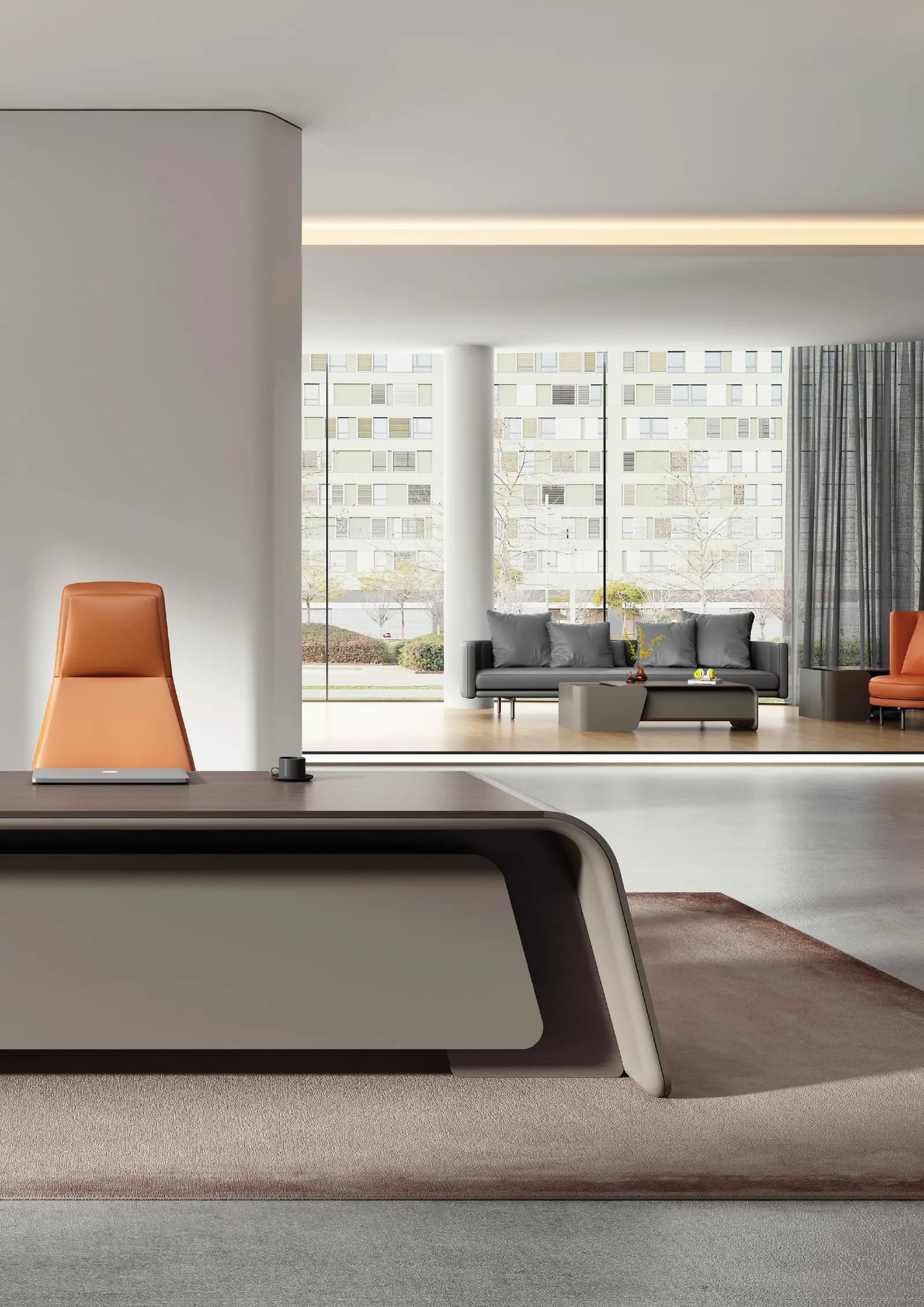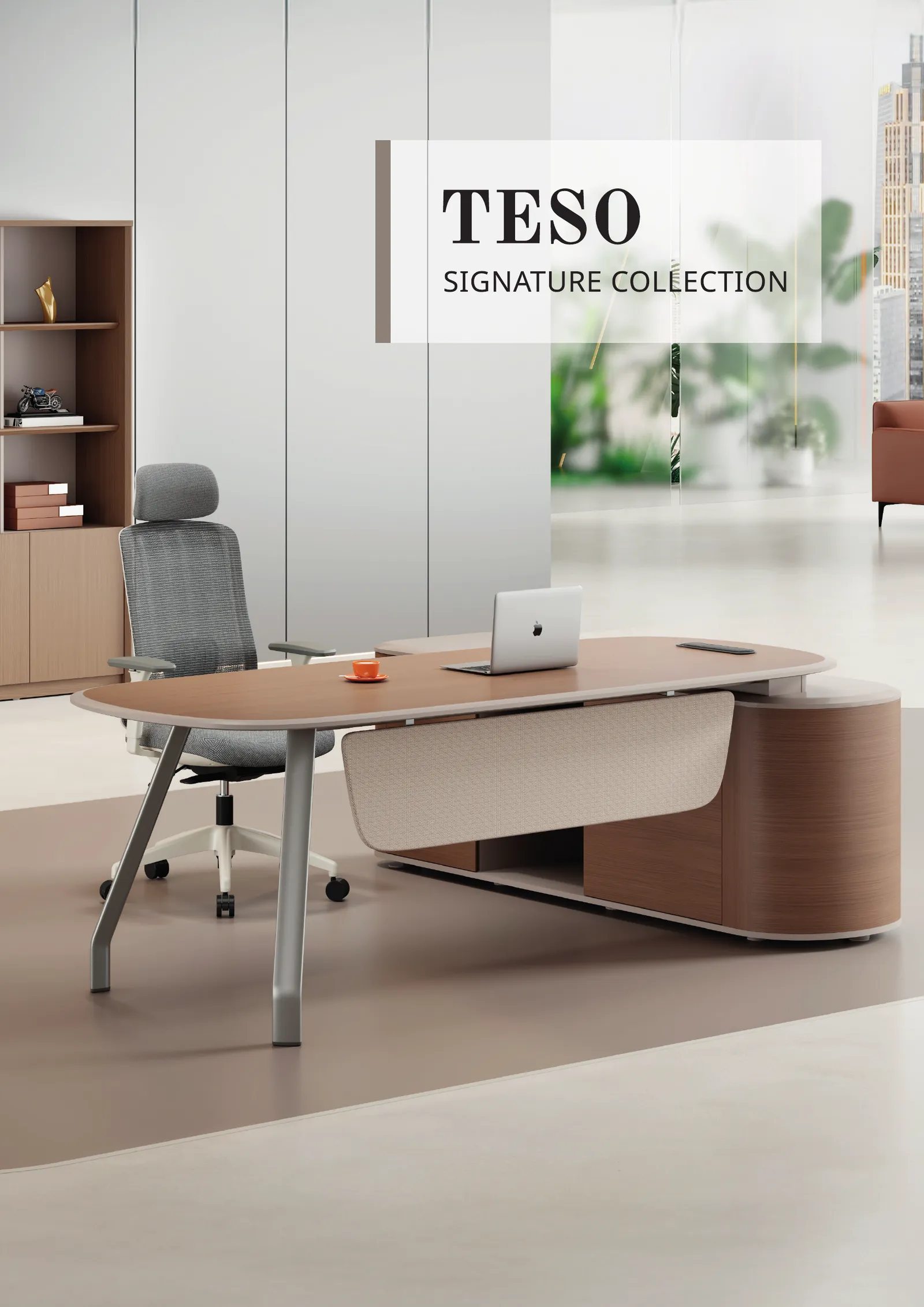
Seven design techniques for an executive office that looks the part
The executive office receives important clients, partners and staff alike. Many companies invest in expensive furniture and still end up with a room that does not look premium, because the arrangement is unbalanced, the colours do not agree, or the desk is buried in clutter. The good news is that a sense of luxury does not come from budget alone — it comes from designing the room systematically. Here are seven techniques designers actually use to bring an executive office up to the level of the role.
Techniques 1–2: the desk's position and size have to balance the room
Start with the heart of the room, the desk. The best position faces the door with a solid wall behind, so whoever is sitting there sees everyone who comes in and reads as settled and credible. Avoid sitting with your back to the door or to a large window — the backlight will reduce you to a silhouette for whoever you are talking to. For size, work from the floor area: a room of 12–16 square metres suits a 1.8–2.0 metre desk, while at 20 square metres and above a 2.4–3.2 metre desk fills the space with authority instead of leaving it echoing.
Techniques 3–4: keep the palette dark and quiet, choose materials that look and wear well
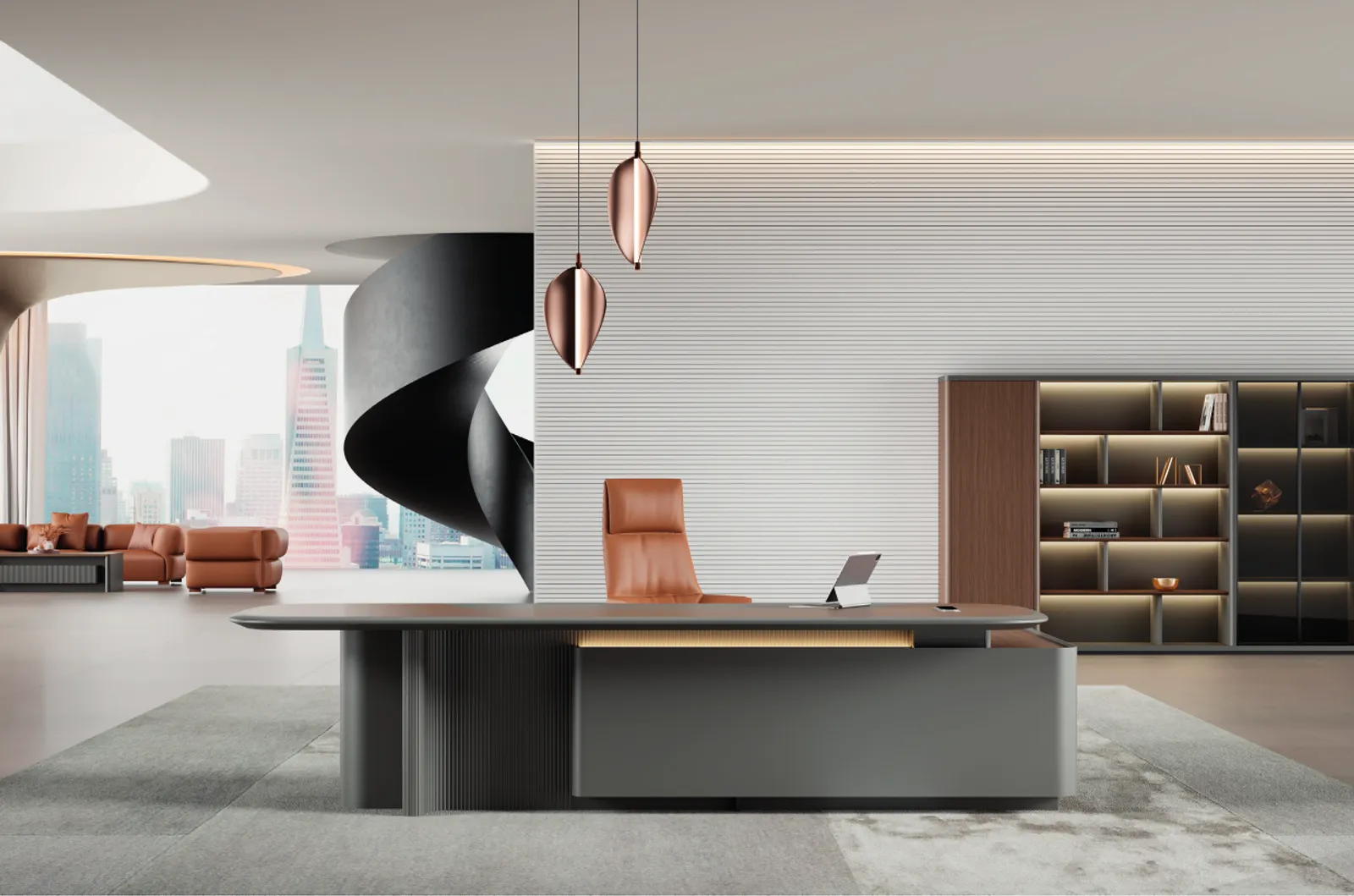
The palette that reads premium and never dates is dark wood against grey — walnut against graphite, as in the DONARO series, which was designed for the executive office specifically. The key is to hold the room to two or three main materials and let texture do the work that decoration otherwise would. A crisp, convincing wood grain with a water- and scratch-resistant melamine surface keeps the room looking composed even under daily use. And remember that furniture built from E0-grade low-formaldehyde board is also safer for whoever uses the room, year after year.
Techniques 5–6: light on several levels, and a place to receive guests
A room lit by a single ceiling fitting tends to look flat, like any other workspace. Try three levels instead: ambient light for the room, a desk lamp for paperwork, and decorative light such as shelf lighting or a floor lamp in the seating corner, to give the room depth and warmth. At the same time, give about a third of the room over to a seating area, with a sofa and a coffee table where an important visitor can talk informally. A great many negotiations go better when they are not conducted across a desk.
Technique 7: hide the clutter in storage that matches
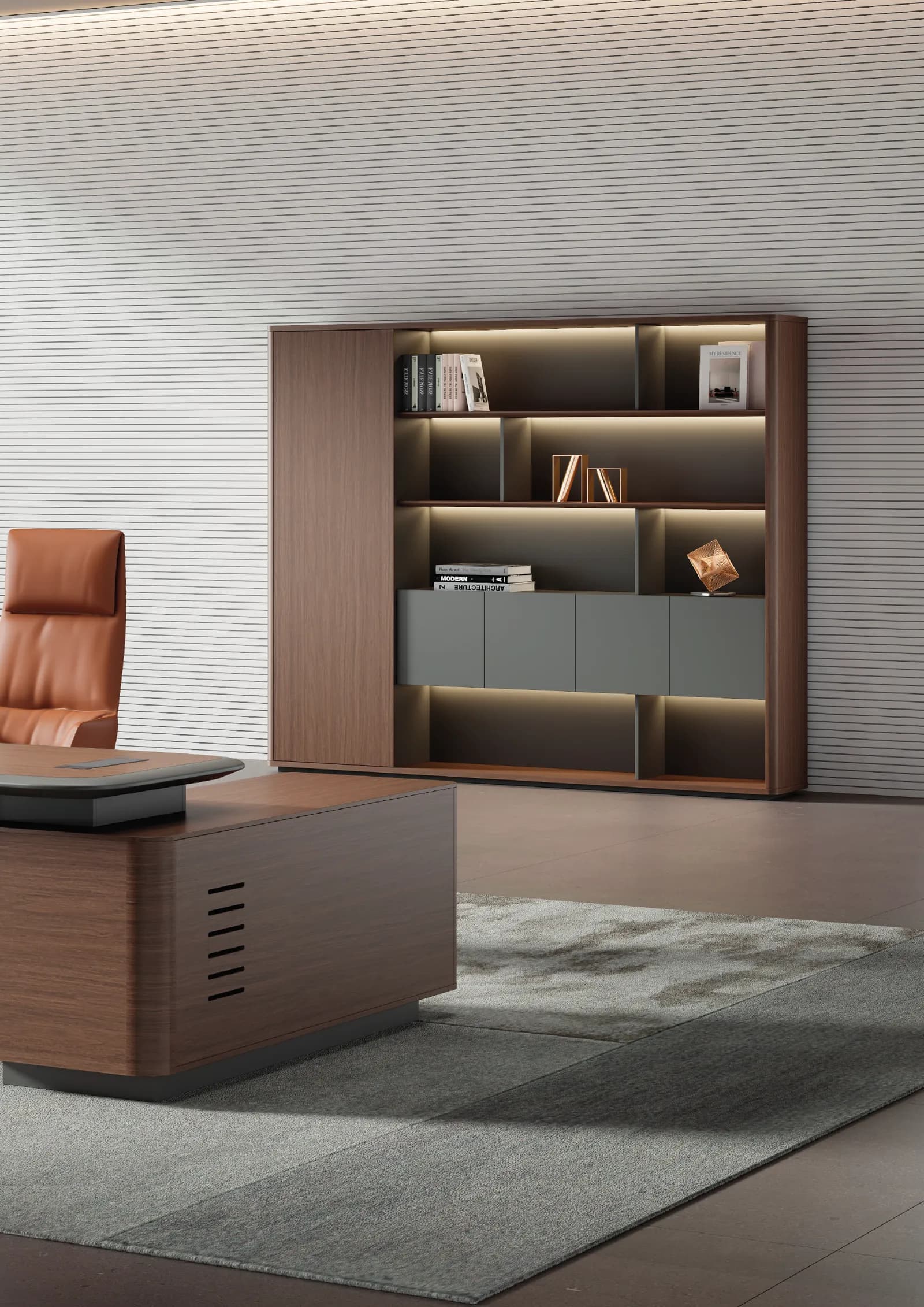
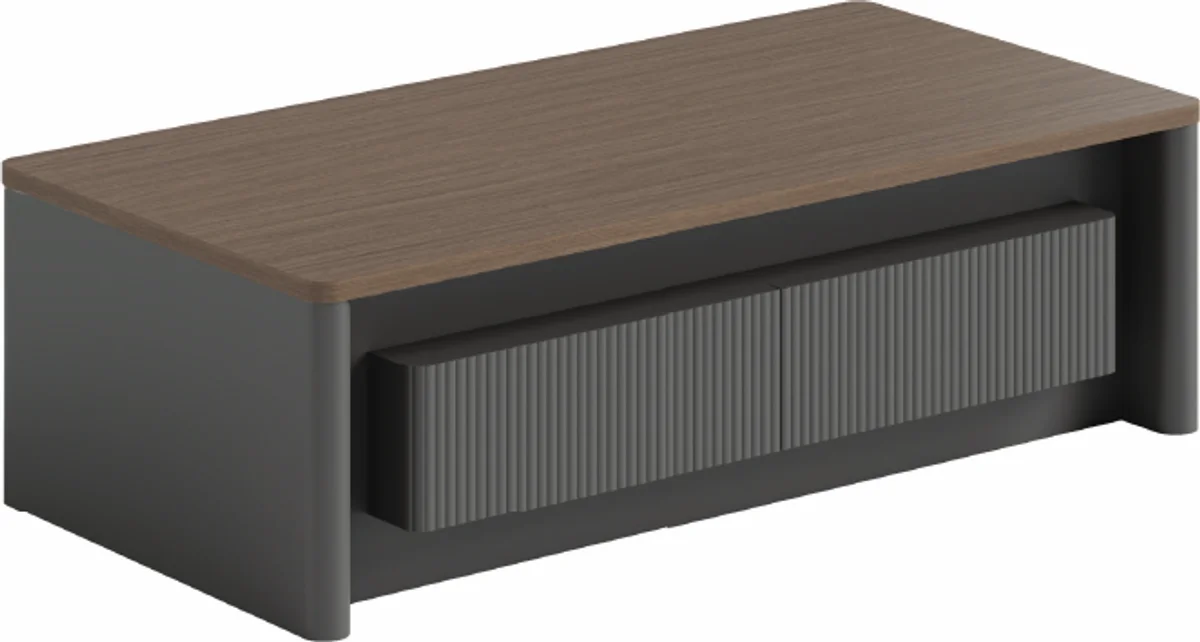
Paper stacked on the desk is the enemy of a premium room. The answer is storage designed to match the desk — a credenza behind it for what you use daily, and a tall divider cabinet that holds a great deal while still looking like a decorative wall. Choose closed doors for what you would rather not display, with open compartments for books, objects or the company's awards. The room looks orderly immediately, without a single storage box.
Before you start, run through this short checklist.
- Desk faces the door, with a solid wall behind and no backlight from a window
- Desk size suits the room, with at least 90–120 centimetres of clearance around it
- No more than two or three main materials, holding to dark wood against grey or a neutral
- Three levels of light: ambient, task and atmosphere
- A guest seating area separate from the desk, with a coffee table for drinks
- Storage that matches the desk, keeping everyday items out of sight
An executive office arranged with intent is not only a matter of image — it is a tool that builds confidence in every conversation held there. If you would like help laying the room out, along with a quote, the WorkStation Office team will do it free of charge at /quote or on 095-424-4166.
See the DONARO executive collection in walnut against graphite grey — an internationally award-winning design.
View the DONARO seriesFrequently asked questions
Which way should an executive desk face?
Facing the door, with a solid wall behind it, so you can see whoever comes in and the position reads as settled and credible. Avoid sitting with your back to a large window, as the backlight leaves you a silhouette to anyone you are talking to.
How big should an executive office be?
Typically 12–20 square metres. A room of 12–16 square metres suits a 1.8–2.0 metre desk; from 20 square metres up you can use a 2.4–3.2 metre desk and still have room for a separate seating area.
On a limited budget, what should I spend on first?
The desk and the chair, since they are the most visible and the most used. Add matching storage and decorative lighting after that — both lift the atmosphere considerably without costing much.